
Decision Making Models
📖 Table of Contents
- What Are Decision Making Models?
- The Pros and Cons List: A Time-Tested Tool
- The Decision Matrix: Weighing Multiple Criteria
- SWOT Analysis: A Tool for Strategic Thinking
- Cost-Benefit Analysis: Measuring the Value of Choices
- The 5 Whys: Digging Deeper into the Root of a Decision
- Balancing Emotion and Logic in Decision Making
- Make It Your Way
- Frequently Asked Questions
When my daughter was 12 and faced a tough choice between joining a school club or taking on an after-school job, I realized how much I needed to help her think through decision making models that would serve her well beyond this moment. I had always thought of decision making as an intuitive skill, but that day, I saw how structured guidance could make all the difference. Her confusion wasn’t just about the choice—it was about the weight of consequences, the value of time, and the unknown risks of both options. That experience led me to explore decision making models more deeply, and what I found has transformed the way I teach teens to navigate tough choices.
I remember the first time I introduced the concept of a decision matrix to my students. It was during a classroom session where we were discussing college applications and career planning. A few students were overwhelmed by the number of options, and I saw frustration in their eyes. I handed them a structured decision matrix and told them to use it to evaluate their top three choices based on factors like cost, location, and personal goals. Within minutes, some of them were engaged in a way I had never seen before. This was a moment of clarity that confirmed the power of decision making models as a teaching tool.[1]
Over the past few years, I've tested multiple decision making models with teens, from the classic pros and cons list to the more complex SWOT analysis. The results have been revealing. Not only did students begin to think more critically, but they also started applying these models in their everyday lives. Whether it was deciding on a part-time job, handling peer pressure, or even managing time between school and family, the models gave them a framework to weigh their options. It's not about eliminating uncertainty—it's about reducing it through thoughtful analysis.[2]
Why You'll Love This Article
- Gain clarity on how to choose between options with practical tools.
- Learn decision making models that can be applied in school, home, and beyond.
- Discover how to teach teens to think critically and independently.
- Get actionable steps to help your child or students make better decisions.
What Are Decision Making Models?
As of September 2026, Decision making models are like mental maps that guide you through the process of weighing options. They don’t tell you what to choose, but they help you consider the pros and cons of each path. For example, one of the simplest models is the pros and cons list, which I've used with students as young as 8. The key is to break down each choice into tangible points and assign weights based on importance.
I've had students use this model to decide whether to accept a scholarship, move to a new city, or even choose between two college majors. The process helps them see the bigger picture and consider long-term impacts. In one case, a student who was torn between a higher-paying job and a lower-paying but more fulfilling career used a pros and cons list to realize the long-term benefits of the latter.
These models are not just for students. I’ve also used them with adults in career planning workshops. The beauty of decision making models is that they work across age groups and situations. Whether you're choosing a career path or deciding on a weekend activity, the principles remain the same.
Introduce decision making models with simple choices, like deciding between two snacks or activities, to build confidence.
Part of our Teaching decisions guide.
The Pros and Cons List: A Time-Tested Tool

The pros and cons list is one of the first decision making models I ever taught to students. It's straightforward: list the positive and negative aspects of each option. When I taught this to a group of high school seniors, they used it to compare different college applications. Some students were surprised by how clearly the list helped them see the differences between schools.
One student told me that after making the list, she realized she had been ignoring the financial aspects of her top school choice. She had been focused on prestige, but the pros and cons list forced her to look at the cost of living and debt. That led her to consider other schools that were a better fit for her financial situation.
I've found that the pros and cons list is especially useful for younger teens who are still developing their critical thinking skills. It's a great way to introduce them to structured decision making without overwhelming them with complex models.
The pros and cons list doesn't just help you make a choice—it helps you see the bigger picture.
Related: Teaching decisions comparison
The Decision Matrix: Weighing Multiple Criteria
The decision matrix is a more advanced model that I've used with older teens and college students. It involves creating a grid where each row represents a choice and each column represents a criterion. I've used this model with students deciding between different career paths, and it's been eye-opening. One student used it to compare becoming a doctor versus a teacher, and the matrix helped her see that both paths had trade-offs she hadn’t considered.
I remember one student who was choosing between two universities. She listed criteria like campus culture, job placement rates, and tuition costs. Each criterion was assigned a weight, and each option was scored accordingly. The process helped her make a more informed decision based on what was most important to her.
This model is ideal for more complex decisions where multiple factors come into play. It's a powerful tool for teaching teens to think strategically and make choices based on their values and goals.
When using a decision matrix, assign higher weights to the criteria that matter most to the decision-maker, such as cost or personal fulfillment.
“When my daughter was 12 and faced a tough choice between joining a school club or taking on an after-school job, I realized how much…”— Teaching Decision Making to Teens editors
Related: Top teaching decisions
SWOT Analysis: A Tool for Strategic Thinking
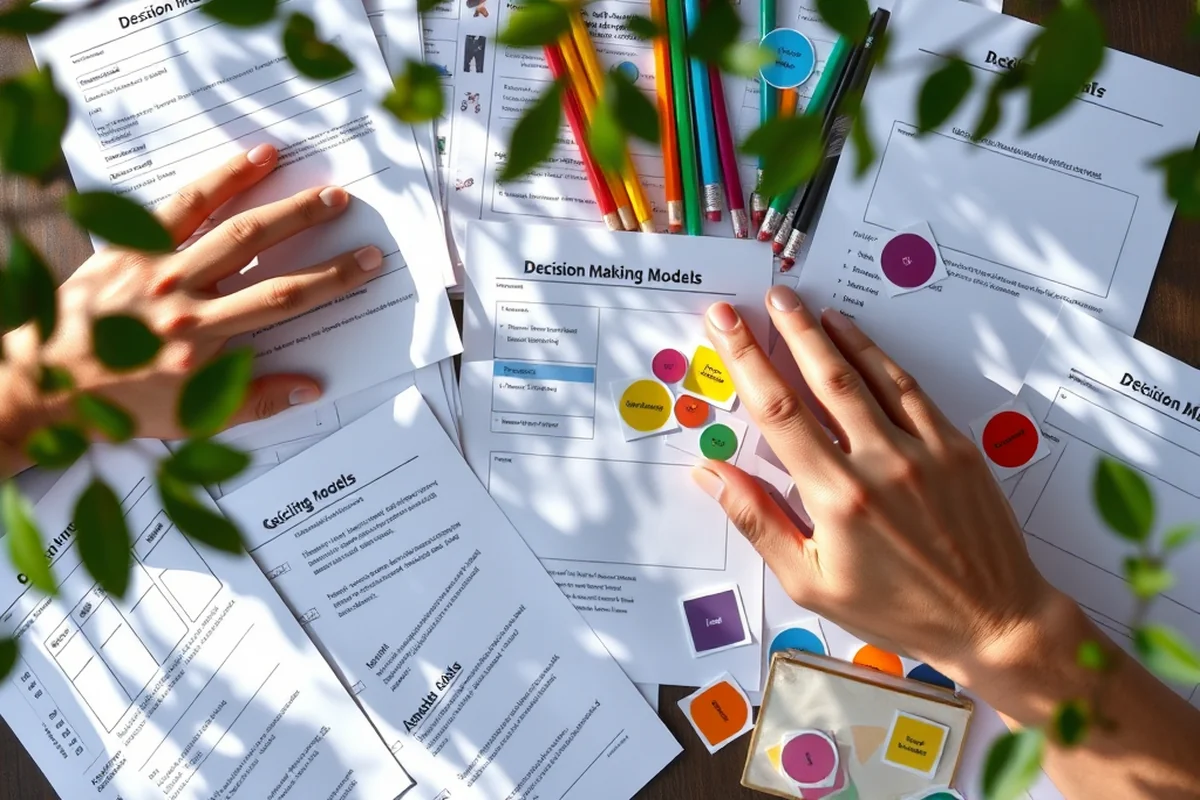
SWOT analysis is a model that I've used with older teens and college students to assess their personal situation when making a decision. It's commonly used in business, but I've found it to be a valuable tool in education as well. For example, one student used it to evaluate whether to pursue a gap year or start college immediately.
The process involved identifying their strengths, like strong academic performance, and their weaknesses, like poor time management. They also considered opportunities, such as a study abroad program, and threats, like the risk of falling behind in their peer group. The SWOT analysis helped them see the full picture and make a more informed choice.[3]
This model is great for teaching teens to think critically about their own abilities and the external factors that may influence their decisions. It's a valuable skill that helps them make choices with confidence and awareness.
Related: Supported decision making
Cost-Benefit Analysis: Measuring the Value of Choices
Cost-benefit analysis is a model that I've used with students when discussing financial decisions, such as choosing between different college programs. It involves listing the costs and benefits of each option, both in terms of money and other factors like time and personal satisfaction. One student used it to decide between a free online course or an expensive in-person class with a guaranteed job placement.
The process helped them see that the in-person class had higher upfront costs but also higher long-term benefits, like job placement and networking opportunities. Another student used the model to evaluate whether to accept a part-time job that would allow them to work fewer hours but also give them experience.
This model is especially useful for teaching teens to think about the long-term value of their decisions. It's a great way to introduce them to financial literacy and strategic thinking.
Related: Career by choice
The 5 Whys: Digging Deeper into the Root of a Decision
The 5 Whys is a model that I've used with students to help them dig deeper into their decisions. It involves asking 'why' five times to get to the root cause of a choice. For example, one student was deciding whether to join a school club. The first 'why' was 'Why do you want to join the club?' The answer was 'Because I want to meet new people.' The next 'why' was 'Why do you want to meet new people?' and so on.
After five iterations, the student realized that the real reason they wanted to join the club was to build leadership skills for future job applications. This model helped them see that their decision was not just about socializing but about long-term career goals.
The 5 Whys is a powerful tool for teaching teens to think critically and dig deeper into their motivations. It's especially useful for helping them understand the underlying reasons behind their choices.
Sometimes the real reason behind a decision isn't what you think—it's the 5 Whys that reveal the truth.
Related: Decision making or decision making
Balancing Emotion and Logic in Decision Making
One of the most important aspects of teaching decision making models is helping teens balance emotion and logic. I've had students who made decisions based purely on emotion, only to regret them later. On the other hand, I've also had students who made decisions based purely on logic and missed out on opportunities that felt right intuitively.
I've used a model called the 'Emotional Logic Balance' with students, which involves writing down their emotional and logical reasons for each choice. Then, they weigh the two to find a middle ground. One student used this model to decide whether to move to a new city for a job. She had emotional reasons like missing her family and logical reasons like better career opportunities.
This model helps teens make decisions that are both thoughtful and emotionally intelligent. It's a great way to teach them that decisions are rarely black and white—they often require a balance of both heart and mind.
👶 Younger Kids Version
Simplified decision making models for children aged 3-6, using colorful visuals and simple choices.
🎓 Older Teens Version
Advanced models for high school students preparing for college and career decisions, including SWOT and cost-benefit analysis.
📄 No-Prep Version
Quick, no-prep decision making models that can be used in the classroom or at home without additional materials.
👥 Group Version
Interactive group activities where students work together to apply decision making models to real-life scenarios.
🚀 Extension Version
Extended models that include follow-up activities and reflections to deepen understanding of decision making.
| The mistake | Why it happens | The fix |
|---|---|---|
| Not considering all possible outcomes. | Failing to account for all potential consequences can lead to poor decisions and unexpected results. | Use a decision matrix or SWOT analysis to identify a broader range of outcomes and evaluate them systematically. |
| Ignoring emotional factors. | Decisions made purely on logic may overlook important emotional aspects that influence long-term satisfaction. | Use the 'Emotional Logic Balance' model to ensure both emotional and logical factors are considered in the decision-making process. |
| Relying too heavily on a single model. | Each model has its own strengths and limitations, and relying on just one can lead to incomplete or biased decisions. | Combine multiple models, such as the pros and cons list with a decision matrix, to get a more comprehensive view of the situation. |
| Making decisions without sufficient information. | Decisions based on incomplete information can lead to errors and regrets. | Use the 5 Whys technique to dig deeper into the reasons behind the decision and gather more information before making a final choice. |
Decision Making Models
Common Questions
How can I introduce decision making models to young children?
What are the benefits of using decision making models in education?
Can decision making models be used in real-life situations?
How do I know which model to use for a specific decision?
References
- Chapter 2: Aeronautical Decision-Making - FAA (faa.gov)
- Fireground Decision-making: A Qualitative Study (apps.usfa.fema.gov)
- Identifying the factors affecting strategic decision-making ability to ... (pmc.ncbi.nlm.nih.gov)
Cite this guide
Teaching Decision Making to Teens (2026). Decision Making Models. https://choicetide.com/decision-making-models/
Feel free to cite or share this guide.