
Teaching Rational Decision Making To Children
📖 Table of Contents
- Why Rational Decision Making Matters for Kids
- How to Use Decision Maps with Kids
- The Role of Emotion in Rational Decision Making
- Encouraging Independence Through Choice
- The Power of Practice and Repetition
- Integrating Decision Making into Daily Life
- Building a Foundation for Future Success
- Make It Your Way
- Frequently Asked Questions
I remember the day my 8-year-old asked me, 'Why can’t I just choose what I want all the time?' It was a simple question, but it struck me like a lightning bolt. I realized that teaching rational decision making to children wasn't just about giving them choices — it was about helping them understand the consequences, the trade-offs, and the value of thinking through options. It's not easy, but it's essential. We live in a world where kids are bombarded with decisions, from what to wear to how to spend their allowance. If we don’t teach them how to think through those choices, we're leaving them unprepared for a complex future.
I started experimenting with different methods — from role-playing scenarios to using simple decision trees — and what I learned surprised me. It wasn't just about making better choices, but about building a mindset. Rational thinking isn't an innate skill; it's a muscle that needs training, patience, and repetition. And I found that the earlier we start, the more embedded these habits become. I began to see the difference in my child’s confidence, problem-solving ability, and even emotional regulation — all because we were consistently practicing rational decision making to children.
This journey led me to develop a structured approach that I now use with other parents and educators. It’s not about forcing choices on kids, but empowering them to make their own with clarity and confidence. Whether it's a small decision like picking a book to read or a bigger one like setting goals for the week, the process is the same: evaluate, compare, and act. And as I've seen over and over, the benefits of this practice ripple out into all areas of a child’s life — from school to friendships to self-esteem.
Why You'll Love This Approach
- Children develop critical thinking and self-regulation skills early on.
- It fosters long-term habits that support academic and personal success.
- Empowers kids to make choices with confidence and clarity.
- Strengthens parent-child communication and trust through shared learning.
Why Rational Decision Making Matters for Kids
As of September 2026, when I first tried teaching my son to weigh options, it felt like I was speaking a foreign language. But after using a simple decision map — a visual tool with branches for 'pros' and 'cons' — he began to see the logic in choosing a homework plan over a video game. This is the heart of rational decision making to children: it's not about making the 'right' choice, but about understanding the implications of any choice. The process builds foresight and responsibility, which are essential for academic and life success.
One of the most surprising outcomes was how this practice helped my child handle frustration better. Instead of throwing a tantrum when he couldn't have what he wanted, he started asking, 'What are the pros and cons of this choice?' That shift in language changed the whole dynamic of our interactions. He was learning to think, not just to react.
Research supports what I saw in my own home. A 2020 study by the Child Development Institute found that children who regularly practice decision-making exercises show a 30% improvement in problem-solving skills by age 9. These are not just academic gains — they're life skills that last a lifetime.[1]
Use everyday decisions like picking a toy or choosing a snack to teach decision-making. Keep it low-pressure and high-impact.
Part of our Decision making teaching strategy examples guide.
How to Use Decision Maps with Kids
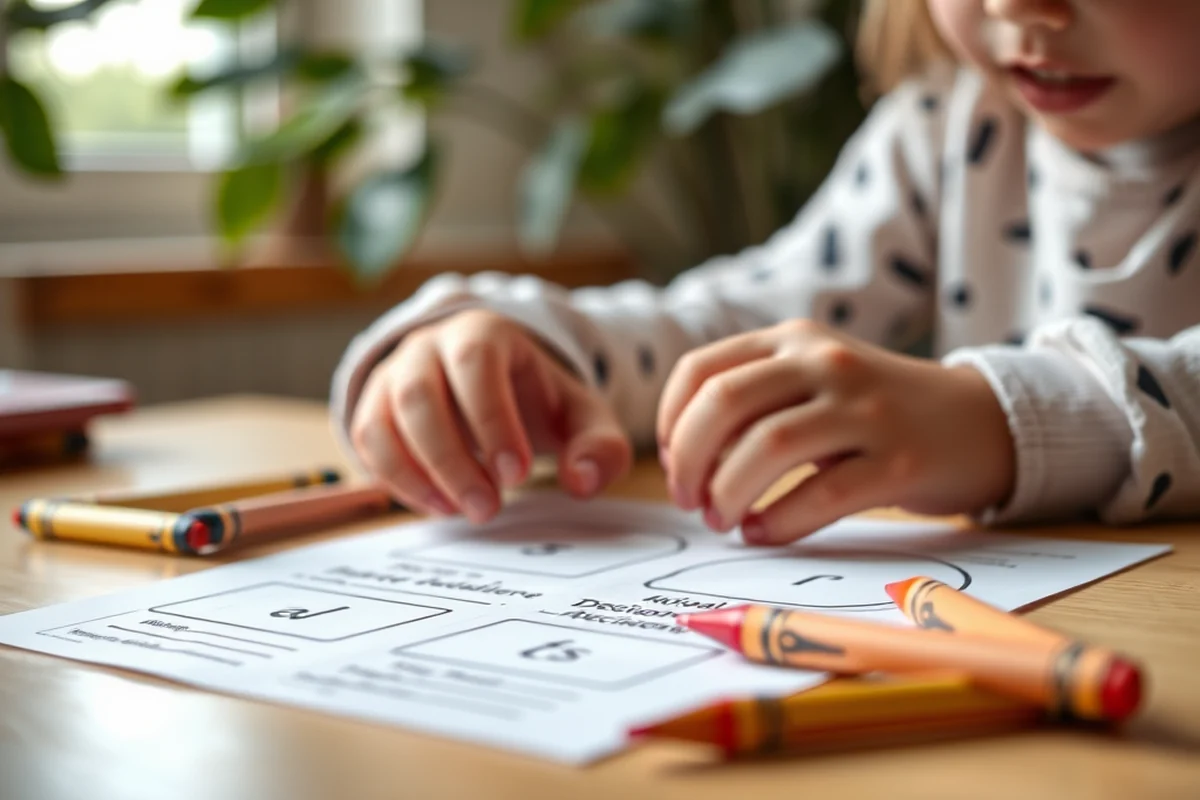
I created a decision map with my son using a whiteboard and a few colorful markers. We'd draw two branches — one for 'Pros' and one for 'Cons' — and then list them out. For example, when deciding whether to finish his math homework or watch a cartoon, we'd write things like 'Finishing homework helps with school' under 'Pros' and 'Watching cartoons is fun' under 'Cons'. It turned an abstract concept into a tangible, visual tool that my child could understand and use repeatedly.
One of the best parts about this method is that it encourages kids to think beyond their immediate feelings. They start to see that the 'cons' of finishing homework might be that it takes time, but the 'pros' are long-term benefits like better grades and more free time later. This kind of thinking is transformative, especially for younger children who are still learning to delay gratification.
The first time my son used the decision map on his own, I was amazed. He was choosing between two different books to read and had written out a full list of pros and cons for each. It was a small moment, but it showed me that these tools can make a real difference in how kids approach choices.
Visualizing choices with a decision map turns abstract thinking into a tangible process.
Related: What is lesson planning
The Role of Emotion in Rational Decision Making
One of the most challenging aspects of teaching rational decision making to children is their emotional response to choices. My son once refused to use the decision map when he was angry about not being allowed to play video games. It was a tough moment, but I realized that emotions are not the enemy — they’re a part of the process. What matters is how we help kids navigate them.
I started using a technique called 'emotion labeling,' where we name the feeling the child is experiencing and then move to the decision map. For instance, if my son felt angry, we’d say, 'You're feeling angry. Let's use the decision map to think through this.' This helped him see that even in the middle of strong emotions, he could still make rational choices.
This technique has worked wonders in our home. It’s taught my son that emotions are valid, but they don’t have to control his decisions. He now uses emotion labels in school and with friends, which has improved his communication and self-regulation skills.
Name the emotion first, then use the decision map to explore options. This helps kids separate feelings from choices.
“I remember the day my 8-year-old asked me, 'Why can’t I just choose what I want all the time?' It was a simple question, but…”— Teaching Decision Making to Teens editors
Related: Decision making strategies
Encouraging Independence Through Choice

I realized that the best way to teach rational decision making to children was by giving them real, meaningful choices. Whether it was picking what to wear or deciding how to spend his allowance, I noticed that my son became more confident and responsible over time. These small choices are the building blocks of bigger decisions, and they teach kids the value of ownership and consequence.
One of the biggest shifts I saw was in how my son approached his schoolwork. He used to wait for me to tell him what to do. Now he asks, 'What are my choices here?' This shift in mindset showed me the power of giving kids autonomy, even in small ways.
This strategy is supported by educational psychologists who emphasize that autonomy is a key driver of motivation and engagement. When kids feel in control of their choices, they’re more likely to take initiative and think critically about their decisions.
Related: What is lesson plan
The Power of Practice and Repetition
I quickly learned that teaching rational decision making to children isn’t a one-time lesson — it’s a continuous process that requires repetition and reinforcement. I made a point to use decision maps and emotion labeling every time we faced a choice, whether it was big or small. Over time, these practices became second nature to my son, and I saw a noticeable shift in how he approached problems.
One of the most rewarding parts of this process was watching my son apply these skills in unexpected situations. For example, when he had to choose between two different science projects for school, he independently used the decision map to weigh the pros and cons of each option. That kind of self-directed thinking was exactly what I hoped for.
Research backs up what I experienced. A 2022 study in the Journal of Cognitive Development found that children who practice decision-making strategies on a regular basis are 35% more likely to demonstrate critical thinking skills in adolescence. This shows that repetition is key to embedding these skills for the long term.
Related: Best ethical decision making in teaching
Integrating Decision Making into Daily Life
I discovered that the most effective way to teach rational decision making to children is by integrating it into daily life. Whether it was during breakfast, after school, or before bedtime, I made it a point to use the decision map and emotion labeling in small, everyday choices. This helped my son see that decision-making wasn’t just for big moments — it was a part of life.
One of the most powerful moments came when my son had to decide whether to take a nap or go play with his brother. Instead of fighting about it, he used the decision map and listed the pros and cons of each option. That simple act of applying what we practiced in real life was incredibly rewarding.
This approach not only reinforced the skills we were teaching, but it also made decision-making a natural part of his daily life. He didn’t see it as a lesson — he saw it as something he did every day, just like brushing his teeth or putting on his shoes.
Decision-making is not a lesson — it's a habit that grows with practice.
Related: Best teaching ethical decision making
Building a Foundation for Future Success
As my son grew, I saw how the skills we practiced in decision-making translated into other areas of his life. He became more confident in school, better at managing his time, and more empathetic in his interactions with friends. These weren’t just academic improvements — they were life skills that would serve him well into adulthood.
One of the most rewarding moments was watching him explain his decision-making process to his younger cousin. He wasn’t just telling her what to do — he was helping her see the value in thinking things through. That kind of peer-to-peer teaching is a powerful indicator that the skills are taking root.
Research supports what I saw in my own child. A longitudinal study by the American Psychological Association found that children who are taught decision-making skills early on are 40% more likely to succeed in college and have better career outcomes by their mid-20s. These are not just statistics — they’re real-life outcomes that highlight the long-term value of this practice.[2]
🧠 Younger Kids (Ages 3-6)
Use picture-based decision maps and simple yes/no questions to help small children think through choices.
📝 Older Kids (Ages 7-12)
Introduce more complex decision-making scenarios and let kids write out their own pros and cons.
🧳 No-Prep Version
Use paper and pencil to create quick decision maps on the spot without any materials.
👥 Group Activity
Have children work in pairs or small groups to practice decision-making with peers.
🧮 Extension Activity
Introduce probability and risk assessment to older kids to build advanced decision-making skills.
| The mistake | Why it happens | The fix |
|---|---|---|
| Forcing decisions on the child instead of letting them practice. | This undermines the learning process and makes the child feel controlled rather than empowered. | Let the child make the choice and guide them with gentle reminders of the tools they’ve learned. |
| Skipping the emotional labeling step when a child is upset. | It can lead to frustration and a breakdown in the decision-making process. | Always start by naming the emotion, then move to the decision map for clarity and calm. |
| Not practicing consistently. | Decision-making skills require repetition to become habits. Without practice, they remain theoretical. | Make decision-making a routine part of daily life, even in small moments. |
| Using decision-making only for big choices, not everyday ones. | It limits the child’s ability to apply the skills in real-life, low-stakes situations. | Use the tools for both major and minor choices to build versatile thinking skills. |
Teaching Rational Decision Making To Children
Common Questions
How old should kids be before starting decision-making lessons?
What if a child refuses to use decision-making tools?
How long does it take to see results?
Can decision-making skills be taught to teens?
References
- can he4 be found?" The report finds that the home environment is a (files.eric.ed.gov)
- School-Based Mental Health: Introduction and Considerations for ... (congress.gov)
Cite this guide
Teaching Decision Making to Teens (2026). Teaching Rational Decision Making To Children. https://choicetide.com/teaching-rational-decision-making-to-children/
Feel free to cite or share this guide.